Key Takeaway: The top-ranked pest control websites in any local market consistently share five patterns: a same-day or emergency availability signal above the fold, individual pages for each pest type, a prominently displayed guarantee or warranty, 40+ recent Google reviews mentioning specific pests, and schema markup paired with a complete Google Business Profile. These are ranking and conversion factors — not design preferences.
Search "pest control [your city]" right now and open the first three organic results. They probably loaded fast. They have a phone number and a service guarantee you can read without scrolling. And somewhere on the page — usually above the fold — there's a message about same-day availability.
Now open a result from page two or three. It likely looks like it was built in 2014, takes four seconds to load on mobile, and offers one generic "Services" page with no clear way to book.
The gap between those two groups is not budget. It is not brand. It is five specific structural decisions that the top-ranked pest control websites make — and the lower-ranked ones skip. This breakdown names exactly what those decisions are and why they move the needle specifically in pest control, where trust, urgency, and specificity drive more conversions than in almost any other home service trade.
Why Pest Control Websites Have a Unique Conversion Challenge
Pest control is a high-anxiety purchase. The person searching is not casually browsing — they found something in their home and they want it gone. That emotional state creates a short window: if your website does not immediately signal that you can solve the specific problem they have, and that you can solve it fast, they will hit the back button and call someone else.
According to Think with Google's research on mobile search behavior, 76% of people who search for something nearby on their smartphone visit a related business within a day — and local service searches convert to contact faster than almost any other category. Pest control searches skew even more urgent: they are rarely planned purchases.
That urgency is also why conversion on pest control websites depends so heavily on specificity. A homeowner who found termites in their garage is not reassured by a site that says "we handle all pests." They want to see the word "termites" — and they want to see a page dedicated to termite treatment, what it involves, how long it takes, and what the guarantee covers. The websites that rank highest are the ones built to answer those specific questions before the visitor has to ask them.
This is the same pattern we documented in electrician website examples — the top-ranked sites in every trade match the specificity of what the customer is searching for. Pest control is where that specificity matters most.
The 5 Patterns Every Top-Ranked Pest Control Website Shares
Pattern 1: Emergency Availability Signal Above the Fold
The single most consistent feature across top-ranked pest control websites is a same-day or emergency availability message that is visible the moment the page loads on mobile — before any scrolling.
This matters in pest control more than in almost any other trade. Roaches in a kitchen, bed bugs in a bedroom, a wasp nest at the front door — these are not situations where the homeowner is willing to wait three days for an appointment. The websites that convert best communicate availability immediately.
What this looks like on the best sites:
- A high-contrast banner or badge near the top of the page: "Same-Day Service Available" or "Emergency Pest Removal — Call Now"
- A click-to-call phone button fixed at the top of the mobile screen — not buried in the footer
- A secondary CTA for non-emergency inquiries: "Book an Inspection" or "Get a Free Quote" — ideally connected to an online booking system that captures the lead even if the visitor doesn't complete the form
The businesses holding the top three organic spots in competitive markets almost universally have this. The ones on page two have a phone number in small text somewhere in the header — and nothing that communicates speed.
Pattern 2: Pest-Specific Service Pages
The top-ranked pest control websites do not have one page that lists every pest they treat. They have individual, dedicated pages for each major pest type:
- Ants — including fire ants, carpenter ants, odorous house ants
- Termites — subterranean vs. drywood treatment methods
- Cockroaches — German roaches, American roaches, treatment timeline
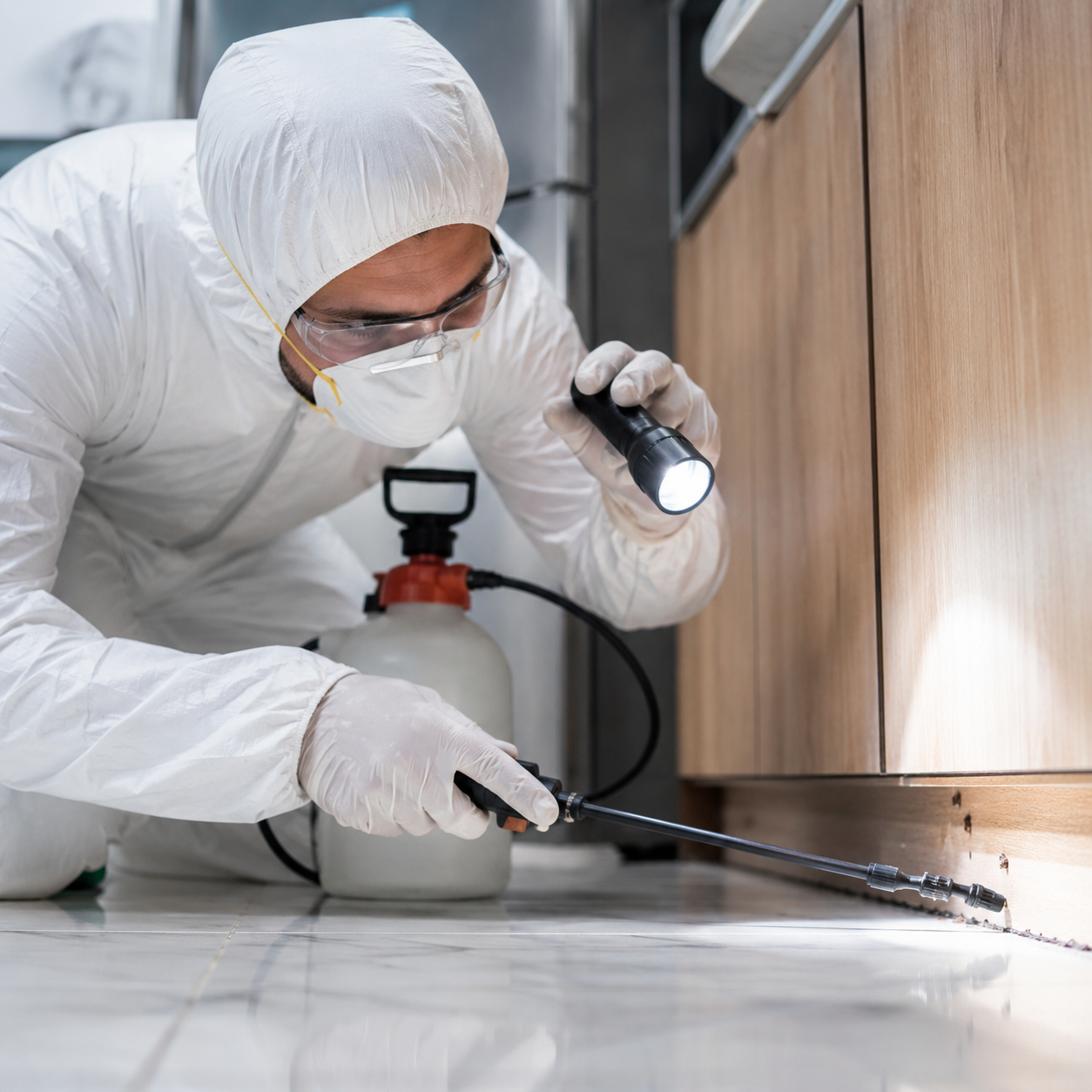
- Rodents — mice and rats, exclusion vs. bait station approaches
- Bed bugs — heat treatment vs. chemical, preparation requirements
- Wasps and hornets — nest removal, seasonal activity warnings
- Mosquitoes — yard treatment plans, subscription options
Each page targets a specific search query ("termite treatment [city]," "bed bug exterminator [city]") and gives the homeowner enough detail to understand what they are buying. A family searching for bed bug treatment does not want to read about rodent control — they want one page that addresses exactly their situation, reassures them about the process, and makes it easy to book.
Moz's local SEO research consistently identifies service-specific pages as one of the highest-leverage structural decisions for local rankings — because they create exact-match keyword pages for searches that a generic "Services" page can never compete with.
Not sure if your current site is structured to rank for pest-specific searches?
Book your free site audit →
Pattern 3: Guarantee or Warranty Prominently Displayed
Pest control customers are making a trust purchase. They are inviting a technician into their home to apply treatments to their living space. They are paying for a result — not just a service visit. The websites that convert best understand this and put their guarantee front and center.
Top-ranked pest control sites display their guarantee in at least two places: above the fold on the homepage, and on every individual pest service page. Common guarantees that convert well:
- Re-treatment guarantee: "If the pest returns within 30 days, we come back at no charge"
- Satisfaction guarantee: "If you're not satisfied after two treatments, we refund your last visit"
- Annual protection plans: Quarterly treatments bundled into a flat annual fee with a coverage guarantee
The guarantee is not just a trust signal — it is a differentiator in a market where most pest control companies look identical. A homeowner comparing three websites will almost always choose the one that explicitly says what happens if the treatment doesn't work.
ReviewTrackers' research on what drives service business conversions found that 94% of consumers say a negative experience — or the fear of one with no recourse — is the top reason they avoid a business. A guarantee directly addresses that fear.
Pattern 4: 40+ Recent Google Reviews Mentioning Specific Pests
Review volume and recency are two of the strongest signals in Google's local ranking algorithm. But for pest control specifically, review content matters in ways it doesn't for other trades.
A homeowner searching for "bed bug exterminator [city]" who sees a review that says "They came the same day and our bed bug problem was completely gone after one treatment" is far more likely to convert than one who reads a generic "Great service, very professional" review. The best-performing pest control sites have enough reviews — and enough review requests in the pipeline — that pest-specific testimonials appear naturally.
Podium's State of Online Reviews research found that 88% of consumers trust online reviews as much as personal recommendations, and that businesses with 40+ reviews receive significantly higher click-through rates from local search results than those with fewer than 20.
The system that produces this is not luck. Top-ranked pest control companies use an automated review request sequence that sends an SMS 2–4 hours after each completed job — while the homeowner's relief is fresh and the experience is top of mind.
Pattern 5: Schema Markup and a Complete Google Business Profile
Schema markup is the invisible infrastructure that separates the websites Google promotes from the ones it ignores. The top-ranked pest control websites consistently have:
LocalBusinessschema withPestControlServiceorHomeAndConstructionBusinesstype- Service schema for each major pest category
AggregateRatingschema pulling from their Google review count and average- Service area and coverage radius defined for the local market
Paired with schema, a fully built-out Google Business Profile is non-negotiable. The top-ranked pest control companies have GBP listings with every pest listed as a service, 15–20 photos, weekly Google Posts with seasonal pest alerts, and Q&A sections answered with keyword-rich responses.
Google's documentation on structured data for service businesses is explicit that schema markup directly influences rich results and local pack eligibility.
What the Bottom-Ranked Pest Control Websites Have in Common
| Top-ranked pest control site | Page 2–3 pest control site |
|---|---|
| Same-day service signal above the fold | No availability information visible without scrolling |
| Individual pages for ants, termites, roaches, rodents, bed bugs | One "Services" page listing all pests |
| Guarantee displayed on homepage and every service page | No guarantee mentioned anywhere |
| 50+ Google reviews, avg 4.7+, pest-specific mentions | 8–15 reviews, last one 4+ months ago |
| Schema markup with PestControlService type | No schema |
| GBP with full service list, 20+ photos, weekly posts | GBP claimed but sparse |
| Click-to-call button fixed at top of mobile screen | Phone number in footer only |
| Booking form or quote request on service pages | "Call us for a quote" as the only CTA |
Where to Start if Your Pest Control Website Isn't Converting
If your reviews are under 30: This is the fastest-ROI fix in local SEO. Implement a post-job SMS review request and focus there for 60 days.
If you have no pest-specific pages: Add pages for termites and bed bugs first — they are the highest-anxiety, highest-ticket pest treatments.
If your guarantee is buried or missing: Add it to the homepage hero and the top of every service page this week.
If your site has no way to capture leads after hours: An AI chatbot that answers pest-specific questions and offers booking times converts a meaningful percentage of after-hours traffic that would otherwise leave with no interaction.
The research on this is consistent with what we covered in how online booking increases revenue for service businesses — capturing the lead digitally, even partially, dramatically outperforms losing it entirely.
Revenue Sites Pro builds pest control websites with all five patterns from day one — same-day signals, pest-specific pages, guarantee placement, review automation, and schema markup. Deployed in 48 hours. Book your free site audit →
Written by Dani Torres
Automation Specialist at Revenue Sites Pro. Dani has reviewed more than 50 pest control company websites across competitive markets — including cities with 30+ active pest control operators bidding on the same local keywords — and identified the structural decisions that separate first-page results from permanent page-two fixtures.