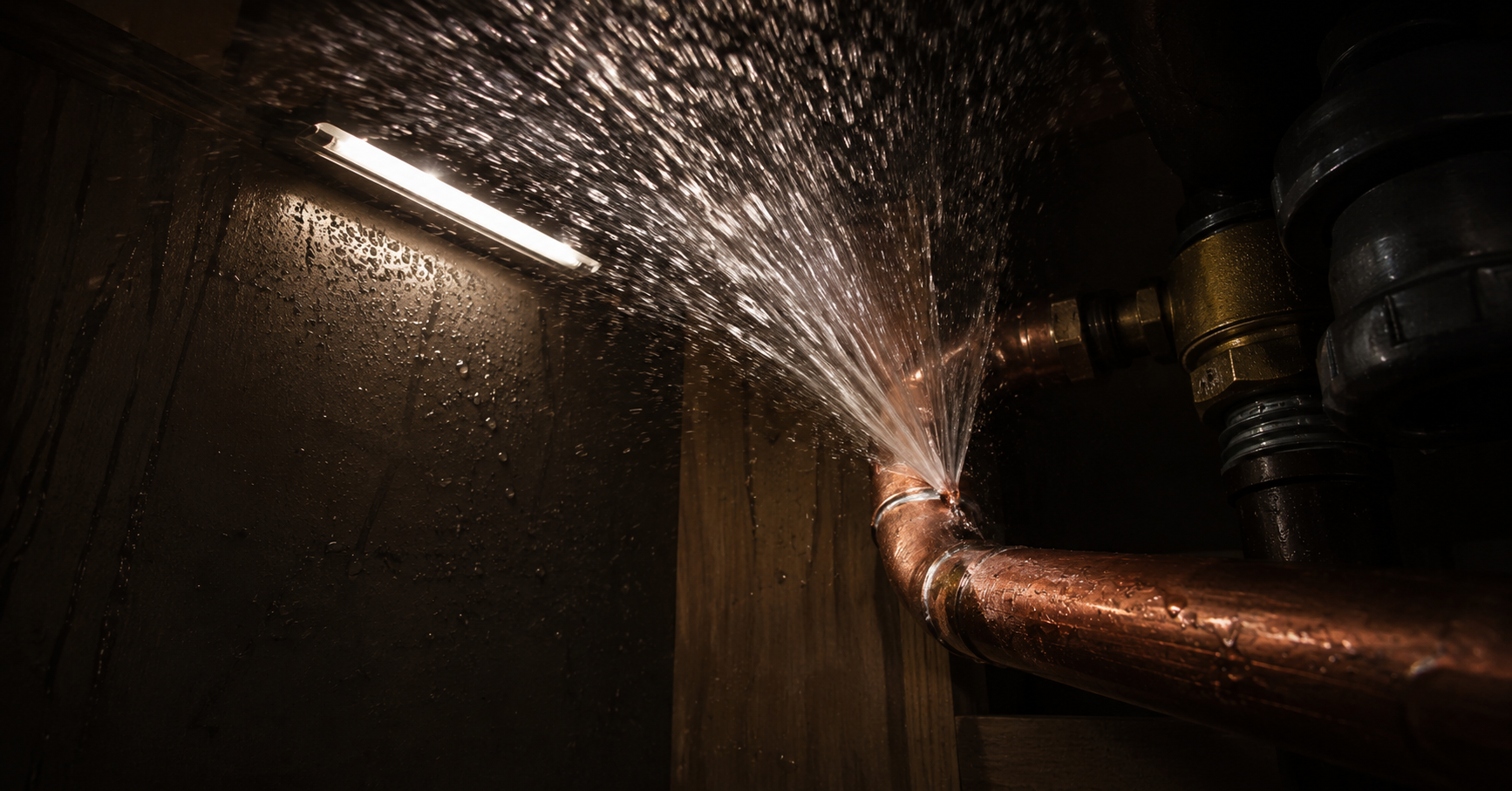
Key Takeaway: 73% of plumbing service calls are urgent or emergency repairs. When a homeowner has a burst pipe at 10pm, the plumber with a visible emergency call button above the fold on mobile wins the job every time. A properly designed plumbing website — mobile-optimized, fast, and built around urgency — converts visitors into bookings before they search again.
A pipe bursts at 10pm. A homeowner grabs their phone and searches "emergency plumber near me." Three results come up.
The first website takes 6 seconds to load. When it finally opens, there's a hero banner with a stock photo of a faucet, a logo, a navigation menu, and somewhere below the fold — a phone number.
The second website opens instantly. Above the fold, first thing visible on mobile: a large red button that says "Call Now — Emergency Service Available." One tap and the phone is already ringing.
Which plumber gets the call?
This is not a hypothetical. It is what happens thousands of times per night across every city in the country — and most plumbing companies are still building websites that look like the first example.
Why Plumbing Is Different From Other Service Businesses
Most service business websites can afford to be informational. Someone looking for a landscaper or a house painter has time to browse, compare, and think. They are not in distress.
Plumbing is different. According to the Plumbing-Heating-Cooling Contractors Association (PHCC), the vast majority of residential plumbing calls are driven by failure events — a burst pipe, a backed-up drain, a water heater that stopped working, a toilet that won't stop running. These are not considered purchases.
That changes everything about how a plumbing website should be designed:
- Speed is non-negotiable. A homeowner with water flooding their basement will not wait 5 seconds for a page to load. Google's research shows that 53% of mobile visitors abandon a site that takes longer than 3 seconds to load.
- The phone number must be visible immediately. Not in the footer. Not behind a menu. Pinned to the top of the mobile screen, tappable on the first view.
- The offer must match the urgency. "Contact Us" does not work for someone with a plumbing emergency. "Call Now — 24/7 Emergency Response" does.
The Emergency Call Button: What It Is and Why It Works
An emergency call button is a persistent, tappable phone link that stays visible at the top of the screen as the user scrolls. On mobile, it is a full-width button — large enough to tap without zooming, high-contrast, and positioned above every other element on the page.
Here is what separates a high-performing plumbing website from a low-performing one:
| Low-converting plumbing site | High-converting plumbing site |
|---|---|
| Phone number in the header, small text | Persistent call button pinned to top of mobile screen |
| "Contact Us" in the navigation | "Emergency Service — Call Now" as primary CTA |
| Generic hero image (stock faucet) | Service van or job site photo, location-specific |
| Page loads in 5+ seconds on mobile | Loads in under 2 seconds on mobile |
| Single phone number | Two buttons: "Emergency Call" and "Schedule Non-Urgent Service" |
| No live booking option | Online booking for non-emergency scheduling |
| Reviews buried in a tab | Star rating and review count visible in hero section |
The split between "Emergency Call" and "Schedule Non-Urgent Service" is important. It signals that you understand the difference between a 10pm burst pipe and a planned water heater replacement — and that you have a system for both.
What Goes Above the Fold on a Plumbing Website
"Above the fold" means what the user sees without scrolling. On a mobile phone — where BrightLocal reports 61% of local service searches happen — above the fold is a small rectangle of screen real estate that needs to do a lot of work.
For a plumbing company website, above the fold should contain exactly five things:
1. Your company name and city — "Rodriguez Plumbing — Dallas, TX" tells the user they found a local provider immediately.
2. A one-line value statement — "24/7 Emergency Plumbing. We Answer Every Call." Not a tagline. A promise.
3. Star rating + review count — "★★★★★ 4.9 (218 Google Reviews)" sitting visibly near the top removes the #1 objection before the user even forms it.
4. An emergency call button — Big, red or high-contrast, says "Call Now" or "Get Emergency Help." Tappable on the first screen view.
5. A secondary CTA for non-urgent scheduling — "Book a Non-Emergency Appointment" sends non-urgent traffic to a booking form without clogging the emergency line.
Everything else — your service list, your story, your photos, your FAQs — lives below the fold. The homepage has one job: get the urgent caller to tap that button before they look at the next search result.
Running a plumbing company and not sure if your website is costing you emergency calls?
Book a free site audit at Revenue Sites Pro →
The Mobile Load Time Problem
Most plumbing company websites are slow on mobile — oversized images, unoptimized code, generic WordPress themes loaded with plugins, and hosting that was not chosen for performance.
Google's Core Web Vitals data shows the median mobile page load for home services businesses exceeds 5 seconds. The standard that drives conversion is under 2 seconds. For a plumbing company, the math is brutal:
- Your site gets 400 monthly visitors from local search
- 53% abandon if the page takes more than 3 seconds to load = 212 lost visitors per month
- If 15% of those would have converted = 32 lost leads per month
- Average plumbing job ticket: $380
- Monthly revenue lost to slow load time: $12,160
Speed is not a technical detail. It is a revenue problem.
Local SEO and the Emergency Search
Emergency plumbing searches are hyperlocal. "Emergency plumber near me" and "plumber open now [city name]" are among the highest-intent searches that exist — the user has an immediate problem and is ready to pay for a solution the moment someone picks up.
To rank for these searches:
- Your Google Business Profile must be complete, verified, and show 24/7 availability for emergency services
- Your website must include your city name and service area naturally throughout the page content
- Schema markup on your site should list your business type, service area, and hours
- You need recent Google reviews — the local pack heavily weights review recency and volume
The Full Plumbing Website Stack
A high-converting plumbing website is three systems working together:
- The website itself — fast-loading, mobile-first, with emergency call button above the fold and booking embedded for non-urgent scheduling
- The local SEO layer — optimized GBP, schema markup, location-specific content, and a review generation system
- The lead capture automation — instant SMS alerts when a booking is made, automated appointment reminders to reduce no-shows, and follow-up sequences for reviews after the job is complete
All three matter. A great-looking site that doesn't rank is invisible. A ranked site that loads slowly loses the caller. A well-designed, fast, ranked site with no follow-up automation misses the review and the repeat customer.
Revenue Sites Pro builds done-for-you plumbing websites with emergency call optimization, AI booking, and local SEO built in — deployed in 48 hours. Request your free site audit →
Written by Caleb Ortiz
Web Systems Architect at Revenue Sites Pro. Caleb audits and rebuilds underperforming service business websites. In a review of 60+ plumbing company sites, he found that fewer than 12% had a properly optimized emergency CTA above the fold on mobile — and that fixing this single element was the highest-ROI change available before any other SEO or content work.